
Centre for Music Theory
Founded in 2007, the Centre for Music Theory serves as a focal point for all music-theoretical activities outside the regular curriculum of the Dresden University of Music. Its aim is to sharpen the profile of a discipline that has undergone significant change in recent years, both within and beyond the university.
News Guest Lectures, Workshops, Interdisciplinary Projects

Filmmusik und ihre Wirkung
Vortrag zu alten und neuen Tendenzen der Filmmusik als erzählerisches und emotionales Mittel.
27.09.2026, 15:00
Kraszewski-Museum Dresden

Prinzipien musikalischer Strukturbildung
Vortrag von Prof. Dr. Martin Rohrmeier (Lausanne) in der interdisziplinären Vortragsreihe »Insights : Zwischen den Zeilen«
Dienstag 14.7.26, 15:00…

Musiktheorie auf Augenhöhe
Studierende coachen Schulklasse beim Songwriting

Atelier Musiktheorie
15.06.26, Montag 18:00
Raum W 4.08
Events Presentations and Concerts
Ear Training with Orlando Available now for free!
Testing and researching new teaching methods is a core task of the Centre for Music Theory. The multimedia ear-training program "Orlando" is considered the first initiative of its kind and is freely available to members of the university. Orlando is an interactive, multimedia ear-training program designed to foster a better understanding of music from various eras, genres, and styles through listening. You can now improve your listening skills with Orlando—conveniently at home and at your own pace.
Thanks to "Orlando" — ear-training software developed since 2009 by Professor John Leigh and his team at the Dresden University of Music — music students can practice from home with professional guidance, initially at no cost…
The program is now available to anyone interested, free of charge and without the need for registration, until further notice.
Entrance Examination
Preparatory Courses
The Centre for Music Theory offers preparatory courses for the music theory/ear training entrance examination (minor subject) at the HfMDD:
Practice Exams
For a large number of degree programs, music theory and aural training are part of the entrance examinations. You can find sample exams for your degree program on the page detailing the admission requirements for your specific instrument, as well as in the overview here:
Music Theory/Aural Training:
Written test with music theory (approx. 30 min.) and ear training (approx. 30 min.) components to demonstrate the following skills:
- Basic knowledge of General Music Theory (keys, scales, intervals, triads, four-part chords and inversions),
- application of basic knowledge of general music theory and harmony (analyzing and writing simple endings and fundamentals of the basso continuo),
- aural grasp of intervals, scales, triads, four-part chords, inversions, melodies, rhythms, instruments.
The written test will take place each day at around 17:00.
Information about the exam
You can download sample exams here:
Klausur Musiktheorie PDF
Klausur Gehörbildung PDF
Music Theory/Aural Training:
Written Test
- General Music Theory
- Basic knowledge of modal and functional analysis, jazz-specific chord symbols and phrases, also in staff notation
- Aural Traning: Listening test with intervals, scales, jazz chords, melodies and rythms
The applicant can be subjected to a short oral exam (ca. 5 minutes) regarding the above mentioned questions, if the tester deems this necessary. The exam might also include singing sight-reading.
You can download a short sample test for self-review:
Download PDF
Music Theory:
Oral examination of approx. 20 minutes to prove the following skills:
- Safe command of general music theory
- Auditory recording of intervals, triads, chords, melodies, rhythms
- Sight singing, tapping the rhythm from the sheet, cadence playing, figured bass, song harmonization
- Analysis of given music examples (formal, harmonic, contrapuntal, stylistic, instrumental)
- Melody and rhythm memory
The written test will take place each day at around 17:00. You can download sample exams here:
Klausur Musiktheorie PDF
Klausur Gehörbildung PDF
Grundschule
Bei einem 60-minütigen schriftlichen Einstufungstest mit verschiedenen Aufgaben zu Musiktheorie und Gehörbildung werden wir Ihre Vorkenntnisse einschätzen. Bitte beachten Sie die Hinweise zur Vorbereitung in Musiktheorie/Gehörbildung.
Hinweise zur Vorbereitung Musiktheorie/Gehörbildung Lehramt Grundschule PDF
Beispielaufgaben zum Herunterladen:
Gehörbildung Grundschule PDF
Musiktheorie Grundschule PDF
Secondary School
To assess your prior knowledge, questions regarding music theory will be asked about one of the performed pieces as part of the comprehensive artistic examination (approx. 3 to 4 minutes).
Notes on Preparation for Music Theory/Aural Training – Secondary School Teaching Degree (PDF)
Gymnasium
Bei einem 60-minütigen schriftlichen Einstufungstest mit verschiedenen Aufgaben zu Musiktheorie und Gehörbildung werden wir Ihre Vorkenntnisse einschätzen. Bitte beachten Sie die Hinweise zur Vorbereitung in Musiktheorie/Gehörbildung.
Hinweise zur Vorbereitung Musiktheorie/Gehörbildung Lehramt Gymnasium PDF
Beispielaufgaben zum Herunterladen:
Gehörbildung Gymnasium/Doppelfach
Musiktheorie Gymnasium/Doppelfach
Lehrende

Bellmer, Leon
Musiktheorie
Gharibnejad, Fojan
Musiktheorie/Gehörbildung
Große, Max
Musiktheorie/Gehörbildung
Gutschi, Felix
Musiktheorie/Gehörbildung
Kaiser, Paula
Musiktheorie/Gehörbildung

Korndörfer, Johannes
Musiktheorie/Gehörbildung
Kretschmer, Johannes
Musiktheorie
Leigh, John
Prof. Dr.
Musiktheorie
Sprechzeiten:
Nach vorheriger Anmeldung
Mo: 13:00-14:00
Raum W 4.09
Lizura, Diana
Musiktheorie
Mohr, Georg
Musiktheorie
Nicolai, Maximilian
Musiktheorie

Sönksen, Sören
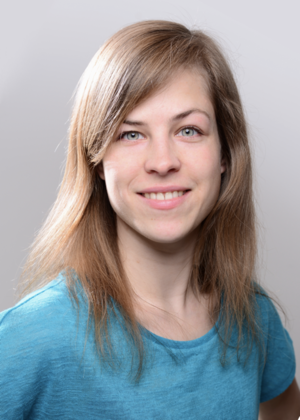
Winter, Judith
Musiktheorie
Studentische Hilfskräfte
Leon Bellmer
Max Große
Paul Oberender