

Institute for Musicology
Old and new music, historical and systematic approaches: The Institute of Musicology seeks to bridge these realms. Its goal is to demonstrate the resonance of "early" music in the present and to shed light on the connections to tradition found in contemporary music.
Research
Research on early Saxon music history sits alongside comprehensive scholarly editions—including the major project to publish the complete correspondence of Clara and Robert Schumann. Studies focusing on composers such as Carl Maria von Weber, Richard Wagner, Richard Strauss, and György Ligeti are developed in conjunction with productions by the Semperoper and the Dresden Philharmonic. Classical Modernism and the music history of Central and Eastern Europe constitute further key areas of focus, complemented by projects addressing sound and structure, semiotics, and aesthetics.
In close collaboration with the Institute for New Music and the field of musical practice, innovative methodological approaches are explored and examined in depth through numerous studies—with more than 30 doctoral dissertations currently underway at the Institute of Musicology. These efforts also reflect connections with a wide range of academies, universities, research institutes, and archives around the world.
Heinrich Schütz-Archive
Founded in 1985 by Wolfram Steude, the Heinrich Schütz Archive has developed into a center for research on 17th-century Central German music. Work is currently underway here on three major complete editions: those of Heinrich Schütz, Andreas Hammerschmidt, and Johann Rosenmüller. Source materials for their works are being systematically collected—not in the form of originals, but as digital copies of all surviving manuscripts and printed editions from around the world, supplemented by scans from the Saxon State Main Archive in Dresden, the Saxon State Library, and numerous other archives in Saxony, Saxony-Anhalt, and Thuringia.
These musical editions are complemented by the "Schütz Documents" (Schütz-Dokumente), a series presenting evidence regarding the lives and works of Schütz and his contemporaries, as well as the living and working conditions of musical ensembles in the 17th century. Studies on the history of the music's reception further augment this philological work.
In addition, the "Central German Cantata Archive" (Mitteldeutsches Kantatenarchiv) documents the breadth of church music in the Electorate of Saxony and makes the repertoire accessible through first editions. (Performance materials are available on loan.)
The holdings of the Heinrich Schütz Archive are open to the public, though they may only be consulted on-site.
Complete Edition of the Works of Heinrich Schütz (Stuttgart Schütz Edition)
Central German Cantata Archive
Education
The Institute’s teaching and research cover the entire field of historical musicology, ranging from early music to the present day. Musicology is a component of Bachelor’s and Master’s degree programs in performance, music education, and teacher training. It can also be pursued as a postgraduate course of study leading to a doctorate. Habilitation in musicology is likewise possible.
History
In the years following the institution's founding in 1952, instruction in music history was shaped by its first rector, Dr. Karl Laux, and numerous other figures, including Dr. Herbert Meißner, Karl Hempel, Hans Böhm, and Gottfried Schmiedel. During the 1970s and 1980s, the discipline was further developed by individuals such as Dr. Frank-Harald Greß, Dr. Friedbert Streller, Dr. Gerd Schönfelder, Eberhard Kremtz, and Dr. Hans John, as well as lecturers Dr. Dieter Härtwig and Eberhard Steindorf.
An internal Department of Musicology was established in 1977; in 1993, this evolved into the Institute of Musicology, incorporating the Heinrich Schütz Archive founded by Dr. Wolfram Steude. Dr. Manfred Fechner was also a member of the Institute, serving as a research associate at the Heinrich Schütz Archive. Prof. Dr. Manuel Gervink succeeded the long-serving head of the Institute, Prof. Dr. Hans John, in 2002. Today, the Institute of Musicology also includes Professors Dr. Michael Heinemann, Dr. Matthias Herrmann, and Dr. Jörn-Peter Hiekel. Konstanze Kremtz works at the Heinrich Schütz Archive.
Institute for New Music
The Institute of Musicology places special emphasis on the study of contemporary music.
The curriculum includes a two-semester lecture series on "New Music," and topics related to 20th- and 21st-century music are frequently selected for diploma theses. Furthermore, each semester features events that bridge the gap between theory and practice. In this regard, the Institute collaborates closely with other departments, particularly the Institute for New Music.
In recent years, the Dresden University of Music has hosted guest lectures and workshops featuring figures such as Dieter Schnebel, Josef Anton Riedl, Vinko Globokar, Helmut Lachenmann, Nicolaus A. Huber, Luca Lombardi, Hans Werner Henze, Steffen Schleiermacher, Aribert Reimann, Georg Katzer, Adriana Hölszky, Peter Ruzicka, Georg Friedrich Haas, and Vladimir Tarnopolski. Additionally, in cooperation with the Institute for New Music, five workshops on non-European music are held annually—distributed throughout the academic year—featuring composers and performers from Asia, Africa, the Americas, and Europe.
Conferences
Between 1981 and 1993, the then Department of Musicology played a leading role in numerous international events held as part of the Dresden Music Festival: four conferences on German Romanticism, seven on the history of Dresden opera, and others focusing on German opera in the second half of the 19th century, the musical traditions of the Dresden Frauenkirche, and the composers Giacomo Meyerbeer, Felix Draeseke, and Jan Dismas Zelenka. Furthermore, symposia were held in collaboration with other institutions regarding Heinrich Schütz, Carl Maria von Weber, Rudolf Mauersberger, and the history of the Dresden Kreuzchor. Conference proceedings were published in the department's own series, with the exception of the reports on Schütz, Mauersberger, and the Kreuzchor, which were published by Peters-Verlag Leipzig and within the "Dresdner Hefte" series, respectively.
In addition, conferences on Romanticism and on artistic reflections concerning the events of February 13, 1945, were organized jointly with the Technical University of Dresden; Similar collaborations on Early Romanticism took place with the Dresden Historical Society (Dresdner Historischeverein e.V.) and the Cultural Office of the state capital, Dresden. Reflecting long-standing ties with Eastern Europe, a colloquium was held in 1996—in partnership with musicologists from the St. Petersburg Conservatory and the Institute of Musicology—to explore musical connections between Saxony and Russia.
A key research focus for the institute has been the diverse range of courtly and civic music—and musical culture—in Dresden, the Wettin royal seat and city of the arts. To explore Dresden's multifaceted links to contemporary music, highly acclaimed conferences themed "Dresden and Avant-Garde Music in the 20th Century" were held in 1996, 1998, and 2000 in cooperation with the Dresden Center for Contemporary Music.
In October 2003, the university hosted a major international conference on the late works of Dmitri Shostakovich. This was followed in May 2004—in cooperation with the Dresden Music Festival—by a colloquium on the subject of "fairy-tale opera" and a symposium on Wilfried Krätzschmar. In October 2004, a colloquium titled "Cultural Identity/Identities" was held in cooperation with the European Centre for the Arts Hellerau, followed in November 2004 by a two-day international colloquium on Bernd Alois Zimmermann. In June 2005, conferences addressed "Musical Interrelations between Saxony and Bohemia: Past and Present" and the music of Adriana Hölszky, while a November 2005 event focused on "Hindemith and the New Music of the GDR." May 2006 saw a symposium on "Music in Medieval Dresden"—part of the "800 Years of Dresden" city anniversary and the Dresden Music Festival—followed in October 2006 by a symposium on "Spaces of Freedom and Fields of Tension: The Situation of Contemporary Music" (in cooperation with the European Centre for the Arts Hellerau) and an international conference on the work of the university's namesake, Carl Maria von Weber.
In 2007, conferences were held on the topics of "Soundscapes: Music and Designed Nature" (as part of the Dresden Music Festival) and "Hearing and Thinking: Music and Philosophy" (again in cooperation with the European Centre for the Arts Hellerau). In 2008—often through various collaborative partnerships—conferences were held on topics such as "New Music and Film" and "1968: A Musical Perspective"; in 2009, events focused on Bohuslav Martinů and "Perspectives on Music after 1989"; and in 2010, a conference marking the 50th anniversary of Günter Raphael’s death took place in cooperation with the Christine Raphael Foundation. In 2011, the International Symposium "Carl Maria von Weber and the Virtuosity of His Time" was held jointly with the International Carl Maria von Weber Society. The Institute of Musicology played a leading role in the conference "Johann Walter in Torgau and Protestant Church Music" at Hartenfels Castle (Torgau), thereby establishing a link to the early history of the Sächsische Staatskapelle Dresden.
A highlight was hosting the annual conference of the German Musicological Society (Gesellschaft für Musikforschung) in September 2013. Representatives of German musicology presented papers in several sessions held not only at the Dresden University of Music but also at the Saxon State and University Library (SLUB) and within the shell of the former Protestant Palace Chapel—featuring its newly completed sling-rib vault—at the Dresden Royal Palace (Residenzschloss). A conference on music in the Palace Chapel during the era of Heinrich Schütz had already taken place at this historically significant site in 2008, organized in conjunction with the "Heinrich Schütz in Dresden" association and the Dresden State Art Collections.
To mark the 91st Bach Festival of the Neue Bachgesellschaft (the second held in Dresden since 1968), the Institute hosted a Bach conference in the Small Hall in September 2016, followed in November of that year by a symposium commemorating the centenary of Max Reger’s death.
Further conferences organized through various collaborative partnerships included:
- 2002: *Ars magna musices*. Athanasius Kircher 1602–2002. Rome, German Historical Institute (in collaboration with Dr. Markus Engelhardt)
- 2003: Wolfgang Stockmeier Days. Concerts, church services, panel discussions; in collaboration with the Dresden College of Church Music (Prof. Dr. Christfried Brödel)
- 2004: Money or Life. Richard Wagner’s "Ring" (in collaboration with the Semperoper Dresden, Prof. Dr. Ilsedore Reinsberg)
- 2004: Public Solitude. The *Lied* around 1900, Vienna (in collaboration with Dr. Carmen Ottner and Prof. Dr. Hans-Joachim Hinrichsen)
- 2005: Max Reger. Organ Music in Context; public seminar in collaboration with the Saxon Organ Academy (Dr. Johannes Roßner)
- 2005: On the Edge of the Abyss. 100 Years of "Salome" (in collaboration with the Semperoper Dresden, Prof. Dr. Ilsedore Reinsberg)
- 2006: Music in the Augustan Age (German-Polish workshop; in collaboration with TU Dresden, Prof. Dr. Hans-Günter Ottenberg, and SLUB Dresden, Dr. Karl-Wilhelm Geck)
- 2007: The Faustian Right to Freedom (in collaboration with the Semperoper Dresden, Prof. Dr. Ilsedore Reinsberg, and the Catholic Academy Dresden, Fr. Clemens Maass SJ)
- 2008: Robert Schumann in Dresden (in collaboration with the Department of Musicology at TU Dresden, Prof. Dr. Hans-Günter Ottenberg)
- 2009: Opera with Knowledge and Passion. Symposium marking the awarding of an honorary doctorate (Prof. Dr. h.c.) Joachim Herz
- 2009: Diva – The Divine Voice (Project Day in Dresden, June 2009; in collaboration with P. Clemens Maass/Catholic Academy Dresden, Ilsedore Reinsberg/Semperoper Dresden)
- 2009: Cultural History of Operetta (with André Meyer and Uwe Schneider, Staatsoperette Dresden)
- 2010: Interpreting Weill (with Dr. Joachim Lucchesi), Dresden
- 2011: “Operetta Edition” (with Heiko Cullmann, Staatsoperette Dresden)
- 2013: Richard Wagner (in collaboration with TU Dresden, Prof. Dr. Hans-Günter Ottenberg, and the Saxon Academy of Arts, Prof. Dr. Peter Gülke)
- 2013: “...What Was Lost”: Jewish Traditions in Operetta (with Heiko Cullmann, Staatsoperette Dresden)
- 2013: “...As You Like It”: Kurt Weill’s *The Firebrand of Florence* (with Heiko Cullmann, Staatsoperette Dresden)
- 2015: “Alles Schwindel” (*All a Swindle*): *Cagliostro in Vienna*; symposium marking the Johann Strauss Festival at the Staatsoperette Dresden (with Heiko Cullmann)
- 2016: Art and Everyday Life – The Correspondence of Clara and Robert Schumann (with Thomas Synofzik, Schumann House Zwickau)
Contact Get in Touch
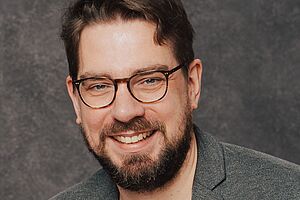
Alexander Lotzow
Prof. Dr.
Leitung Institut für Musikwissenschaft
Phone: +49 351 4923-612
Raum P 4.05 (Wettiner Platz 10, 4. OG)
Sprechstunde: nach Vereinarung; bitte melden Sie sich per E-Mail
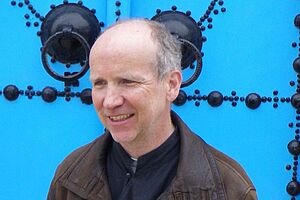
Jörn Peter Hiekel
Prof. Dr. phil. habil.
Leitung Institut für Neue Musik
Phone: +49 351 4923–630
Raum P 4.08 (Wettiner Platz 10, 4. OG)
Sprechzeit:
Mittwoch 15:00-16:00
nur nach Voranmeldung per Mail

Konstanze Kremtz
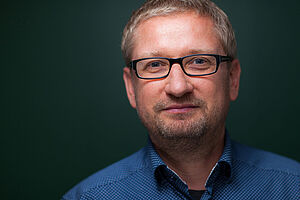
Wolfgang Mende
Dr. phil.
Prodekan Fakultät II
Vorsitzender der Promotionskommission
Vorsitzender der Abschlussarbeitskommission
Phone: +49 351 4923-610
Raum P 4.06 (Wettiner Platz 10, 4. OG)
Sprechzeit: Montag, 16:00-17:00 (Voranmeldung per Mail erbeten)
Gerne auch per Videochat
In der vorlesungsfreien Zeit individuelle Terminabsprache per Mail
Professors Emeriti
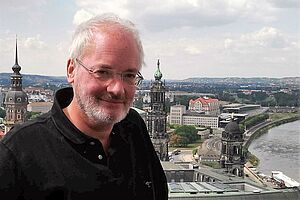
Manuel Gervink
Prof. Dr. phil. habil.
Musikwissenschaft (emeritiert)
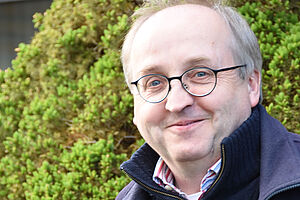
Michael Heinemann
Prof. Dr. phil. habil.
Musikwissenschaft (emeritiert)

Matthias Herrmann
Prof. Dr. phil. habil.
Musikwissenschaft (emeritiert)